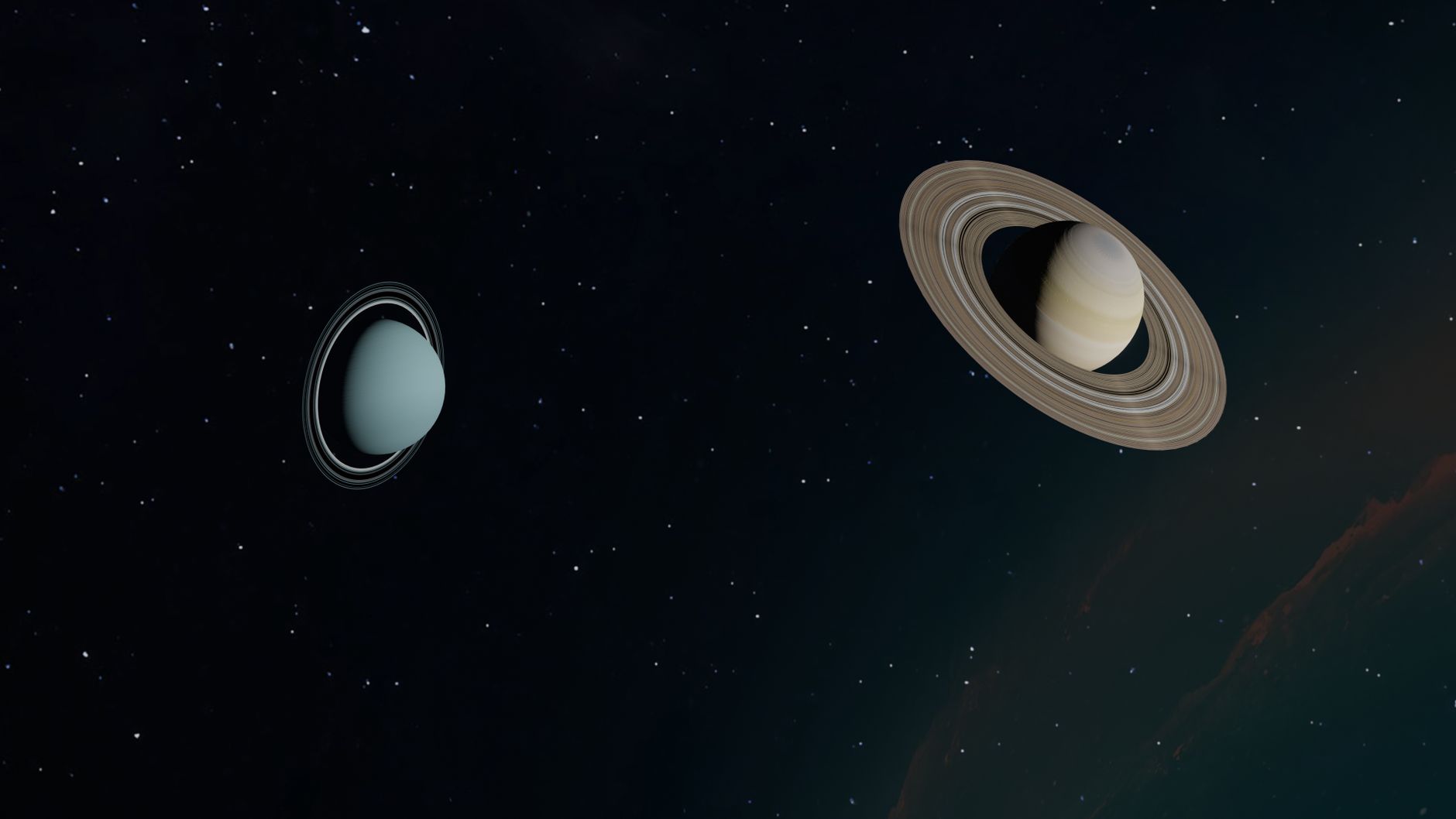
The Uranus magnetic environment has long been a topic of intrigue in space science. Recent findings reveal that the conditions during the only spacecraft visit were exceptionally rare, challenging previous understandings.
Understanding Uranus’s Magnetic Environment
Understanding Uranus’s magnetic environment has proven to be a challenging endeavor for scientists. The only spacecraft ever to visit the planet, Voyager 2, arrived during a rare solar-wind condition that occurs only 4% of the time, potentially skewing our understanding of the planet’s magnetosphere.
This unique circumstance compressed the dayside volume of Uranus’s magnetosphere by as much as 78%, raising questions about the reliability of the data collected. As a result, the information gathered may not accurately represent the true nature of Uranus’s magnetic environment.
Scientists have identified several complexities surrounding this magnetic field, which is tilted at an unusual angle and offset from the planet’s center. This peculiar orientation complicates the interaction between Uranus and the solar wind, making it difficult for researchers to draw definitive conclusions about its characteristics.
- The magnetic field’s strength varies significantly across different regions.
- Uranus’s magnetic environment is believed to be influenced by its unique atmospheric composition.
- Future missions could provide new insights into the dynamics of this enigmatic planet.
As researchers continue to analyze the existing data and prepare for potential future explorations, the quest to fully understand Uranus’s magnetic environment remains a high priority in planetary science.
What Did the Spacecraft Discover?
The Voyager 2 spacecraft, which flew by Uranus in 1986, provided the first and only close-up observations of the planet’s unique magnetic environment. Its findings revealed a complex and tilted magnetic field that does not align with the planet’s rotational axis, leading scientists to question the existing models of planetary magnetism.
During its flyby, Voyager 2 encountered solar-wind conditions that were exceptionally rare, only occurring 4% of the time. This anomaly compressed the dayside volume of Uranus’s magnetosphere by up to 78%, creating significant challenges in interpreting the data collected. As a result, many aspects of Uranus’s magnetic environment remain poorly understood.
The spacecraft detected a number of intriguing features:
- A misaligned magnetic axis: Unlike Earth, Uranus’s magnetic field is tilted at a sharp angle, complicating predictions about its behavior.
- Asymmetrical magnetosphere: The magnetosphere appears uneven, leading to irregular interactions with solar wind.
- Magnetotail dynamics: Voyager 2 observed a distinct magnetotail that challenges conventional models.
These discoveries suggest that Uranus’s magnetic environment is not only unique but also holds secrets that have yet to be fully unraveled.
How Rare Are Solar-Wind Conditions at Uranus?
Solar-wind conditions at Uranus are incredibly rare, occurring only about 4% of the time. This scarcity poses significant challenges for scientists trying to understand the planet’s magnetic environment. When the Voyager 2 spacecraft flew by Uranus in 1986, it encountered these unusual conditions, which resulted in the compression of the dayside volume of its magnetosphere by as much as 78%. This dramatic alteration in the magnetic environment suggests that the typical models used to describe Uranus’s magnetic field may not fully capture its complexities.
To comprehend the implications of these rare solar-wind conditions, it is essential to recognize how they affect the interaction between the solar wind and Uranus’s magnetosphere. The properties of the solar wind can vary greatly, depending on factors such as solar activity and the solar cycle. Consequently, the unique conditions encountered by Voyager 2 may not represent the average experience of Uranus.
As researchers continue to analyze the data collected during the flyby, they must consider how these exceptional solar-wind conditions influence the overall understanding of Uranus’s magnetic environment. The discrepancies between observed phenomena and theoretical predictions highlight the need for further investigations into the planet’s magnetospheric dynamics under varying solar conditions.
Implications for Future Research on Uranus
The insights gained from the Voyager 2 mission have significantly shaped our understanding of Uranus’s magnetic environment, but they also highlight the gaps in our knowledge. The spacecraft’s observations were made during unique solar-wind conditions that are rarely encountered, leading to questions about the generalizability of its findings. This situation presents several implications for future research on Uranus.
First, there is a pressing need for more targeted missions to Uranus that can operate under diverse solar-wind conditions. Such missions could provide a clearer picture of the planet’s magnetic environment and how it behaves under varying cosmic circumstances.
Second, researchers must prioritize the development of advanced models to simulate Uranus’s magnetosphere. These models can help predict the planet’s magnetic behavior during different solar-wind scenarios, potentially guiding future observational campaigns.
- Conducting long-term studies to capture a broader range of solar-wind interactions.
- Utilizing ground-based telescopes and space-based observatories to complement data from potential missions.
- Collaborating with international space agencies to pool resources and expertise for comprehensive studies.
Ultimately, deepening our understanding of Uranus’s magnetic environment will require innovative approaches and collaborative efforts across the scientific community.
The Uranus magnetic environment presents unique challenges for scientists attempting to unravel its mysteries. Despite advancements in space exploration, the Uranus magnetic environment remains one of the least understood in our solar system.
Photo by Zelch Csaba on Pexels
Sources
You might also like
Lundbeck migraine drug: Safe and Proven Vyepti Approved! · AstraZeneca stock gains: Is it the best time to invest? · Pharma stock acquisition: Clear path to market success